🚗 Battery-Powered Auto Buffer – 12K RPM 3-in-1 Polisher, Waxer & Scratch Remover
🚗 Battery-Powered Auto Buffer – 12K RPM 3-in-1 Polisher, Waxer & Scratch Remover


Couldn't load pickup availability
-
Ordered
- - -
Order Ready
- - -
Delivered

🚗 Battery-Powered Auto Buffer – 12K RPM 3-in-1 Polisher, Waxer & Scratch Remover
The detail shop finish.
In your driveway. On your schedule.
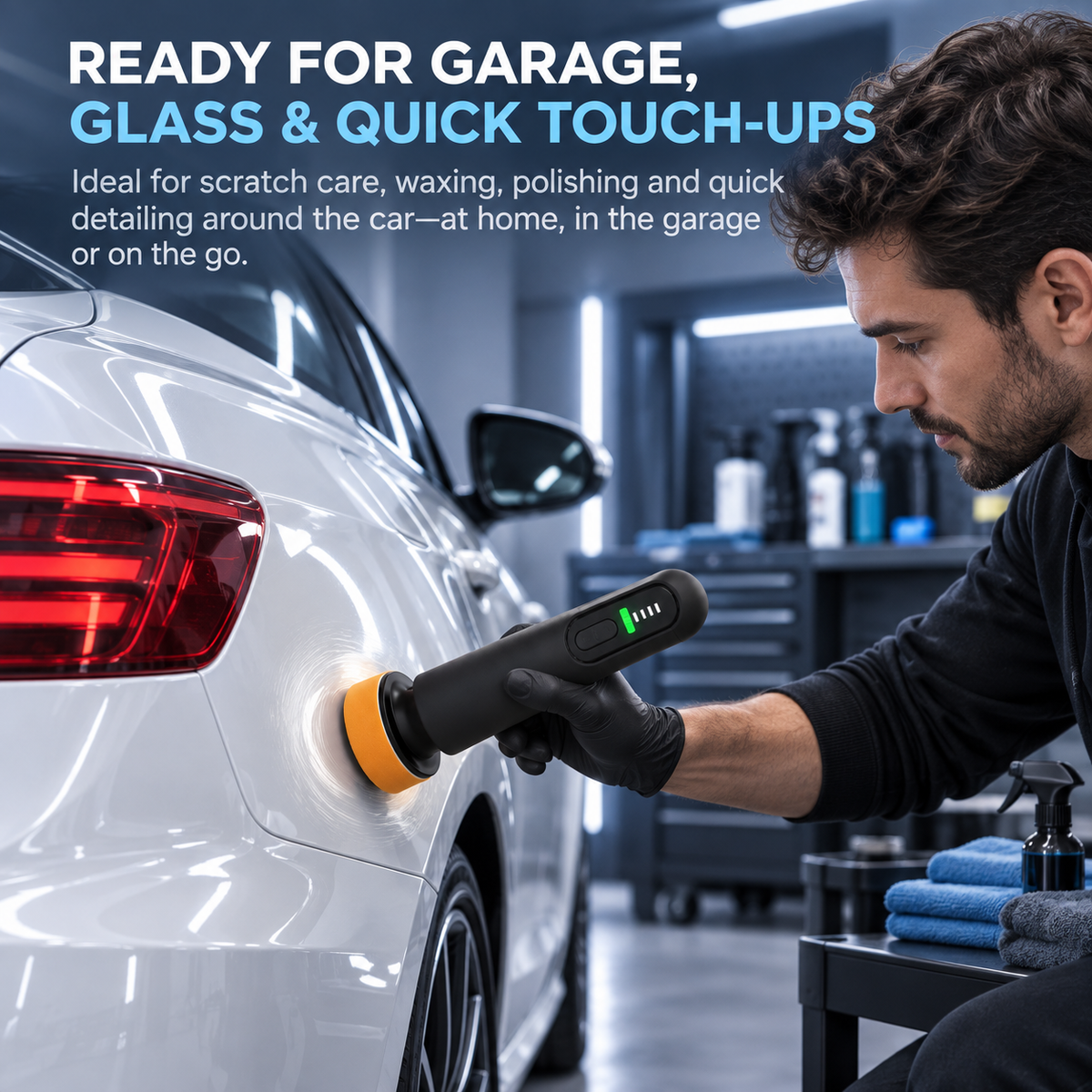
A cordless 12,000 RPM electric polisher that buffs, waxes, and removes light scratches without an extension cord or a $200 detail appointment. Removes oxidation, swirl marks, and oil film from paint and glass. Restores the shine your car had the day you bought it. One tool, all the jobs, no shop visit required.

One tool replaces
three products and two trips to the store.
Most car owners have a bottle of polish, a wax they apply twice a year, and a scratch remover they tried once and gave up on. Three products, three application methods, three sets of pads and cloths. This polisher handles all three functions with the right pad and compound — which means one tool in the garage instead of three, and one consistent technique instead of guessing which product does what.

The RPM that actually
removes defects instead of buffing over them.
Surface speed is the difference between a polisher that works and one that just moves product around. At 12,000 RPM, the pad is generating enough rotary motion to heat the compound slightly and work it into the clear coat — which is the mechanism that removes swirl marks and light scratches rather than masking them. Detail shops use high-RPM rotary tools for the same reason. This brings that same operating principle to a cordless, portable format.

Driveway. Parking lot.
Wherever the car is, the polisher works.
A corded polisher is limited to wherever the extension cord reaches — which means the car has to come to the outlet, not the tool to the car. A cordless polisher goes where the car is: the driveway, the parking garage, the campsite after a muddy road, the tailgate before the game. No cord to manage around the vehicle while you’re working. No outlet hunting. No tripping hazard across the garage floor.

Home driveway
Parking garage
Road trip & camping
Pre-game tailgate
Garage detailing
Rental car return
Clear coat and windshield.
The same tool handles both.
Most polishers are sold as paint-only tools. This one handles glass as well — specifically the oil film that builds up on windshields from exhaust residue, road grime, and rain. That film causes the glare pattern at night that makes oncoming headlights bloom and scatter — a visibility issue that wipers make worse, not better. With the appropriate glass polishing pad and compound, the 12,000 RPM action removes oil film from glass the same way it removes oxidation from clear coat.

Not just a clean car.
The satisfaction of doing it right yourself.
There’s a particular kind of satisfaction in stepping back from a freshly detailed car that you did yourself — paint that reflects cleanly, glass that’s clear instead of hazy, a finish that looks like it just left the showroom. This polisher makes that achievable in an afternoon without specialized training, a shop visit, or a bill that makes you wince. You own the tool. You control the result. You’re done when it looks the way you want it to look.

Everything
worth knowing.
| Motor Speed | 12,000 RPM — high-speed rotary action for effective compound work |
| Power Source | Battery-powered (cordless) — no extension cord required |
| Functions | 3-in-1: polish, wax application, scratch & oil film removal |
| Surface Compatibility | Automotive paint, clear coat, windshield glass |
| Removes | Swirl marks, light scratches, oxidation, oil film, water spots |
| Best For | DIY detailing, driveway use, portable touch-ups, gifting |
| Not For | Deep paint scratches through primer or bare metal — use body filler for structural damage |
Frequently asked questions.
Will this remove deep scratches that go through the clear coat? +
This polisher is effective on surface-level defects — swirl marks, light scratches within the clear coat layer, oxidation, and minor paint scuffs. If a scratch is deep enough that you can feel it with your fingernail catching on the edge, or if it has gone through to the primer or bare metal, a polisher will not remove it. Those require touch-up paint or body filler work. For anything that’s within the clear coat — which covers the majority of parking lot scratches, swirl marks from improper washing, and surface oxidation — the 12,000 RPM action combined with the right compound will reduce or eliminate the defect.
Does it work on windshield oil film? How does that process work? +
Yes — oil film removal from glass is one of the specific use cases. The process uses a glass-safe polishing compound (not paint compound) applied with an appropriate pad, worked across the glass surface at speed. The high RPM action combined with the abrasive compound removes the hydrophobic oil layer that builds up from exhaust, road spray, and contaminated rain. After removal, the windshield will bead water properly and wipers will make full contact with the glass rather than chattering across the oil film. Use a designated glass compound and pad for this application — not the same setup as paint work.
How long does the battery last per charge? +
Battery runtime depends on the motor load and operating speed. For typical detailing use — polishing a full-size vehicle in sections, alternating between heavy compound work and lighter wax buffing — expect runtime consistent with comparable cordless power tools in this category. For a full vehicle detail session, having a spare battery or a charging break between panels is a common practice. Check the product listing for the specific battery specifications and included accessories for your configuration.
Do I need to buy separate polishing compounds and pads? +
The polisher is the machine — compounds and pads are the consumables that determine the result. For paint polishing, you’ll need a polishing or cutting compound appropriate for your defect level (light swirl marks vs. heavier oxidation). For wax application, a softer foam pad and a liquid or paste wax of your choice. For glass oil film, a glass-specific compound and pad. If the listing includes compounds or pads in the package contents, those are specified there. Using the right compound and pad combination for each task is what produces the best result.
Is this suitable for a beginner or do you need detailing experience? +
This is suitable for a motivated beginner doing their first detail job. The cordless design removes cord management complexity. The key beginner practices are: work in the shade or indoors (not in direct sun), keep the pad moving — don’t stop the pad in one place while the motor runs, start with a less aggressive compound than you think you need and increase if necessary, and work in small sections at a time. Most of what separates a beginner’s result from a professional’s is technique and product selection, not the tool itself. With a quality polisher at the right RPM, a beginner can achieve a significant improvement on their first attempt.
Is this a good gift for someone who cares about their car? +
Yes — it’s one of the stronger practical gifts for a car enthusiast or anyone who takes pride in vehicle appearance. It replaces the hand-polishing routine that most car owners do poorly because they don’t have a machine, handles the glass oil film problem that most people don’t know how to address, and is cordless enough to actually get used rather than stored because the cord is inconvenient. For Father’s Day, birthdays, or any occasion for a car-proud person in your life, this is a tool they’ll use the same weekend it arrives.
The detail shop finish.
Done your way, on your time.
A 12,000 RPM cordless polisher that buffs, waxes, and removes light scratches from paint and oil film from glass. No appointment, no cord, no shop markup. Order yours — or gift it to the car owner who’s been meaning to handle that faded hood for the past two summers. ✨